
The old map
needs a second look.
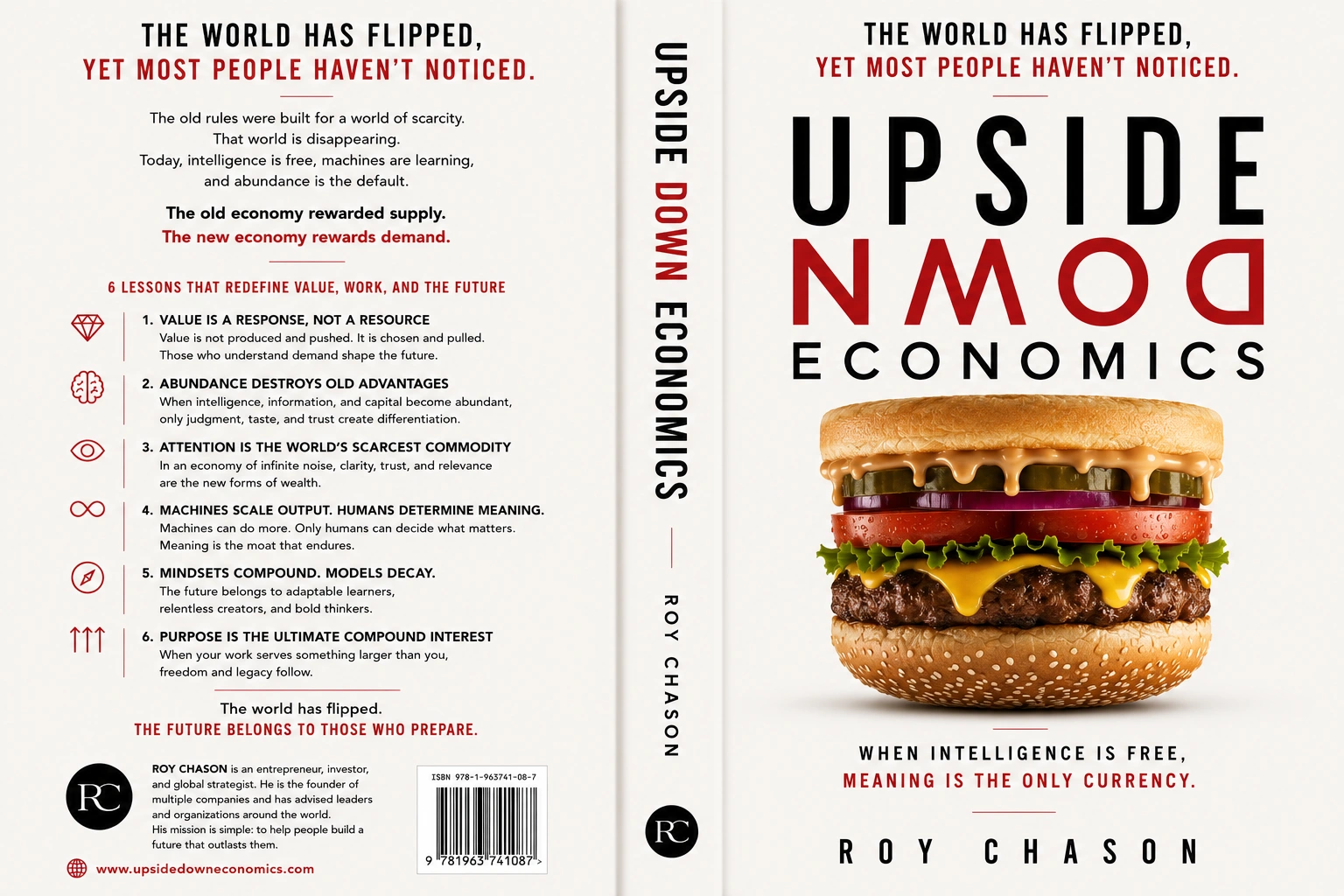
What happens to value when production, information and intelligence become more abundant? Roy Chason’s book explores the implications for work, leadership and human meaning.
Take the ideas
into the world.
Upside Down Economics examines a shift from producing more to understanding what people value: attention, trust, identity, experience and belonging. It also considers why adaptability and breadth matter when established paths become less predictable.
We use these themes to frame questions, then test them against the businesses, people and places participants encounter. A trip should leave room for disagreement, surprise and evidence that changes your view.
Abundant intelligence. Scarce attention.
How do organizations create value when access to information and AI tools becomes widespread? The question links technology adoption with differentiation, trust and the ability to earn attention.
Demand, identity and meaning.
What makes people care enough to buy, participate or belong? Micro-consumption, livestream commerce, brands and experiences offer different ways to examine the economics of desire.
Adaptation as a capability.
What helps people and organizations remain effective when familiar assumptions fail? We examine leadership, learning across disciplines, reinvention and the ability to work across cultures.
One set of questions.
Different places to examine them.
China
From AI and robotics to livestream commerce and micro-consumption: how do production and demand evolve together?
Iceland
Wellness, place and natural resources: what makes a physical experience valuable in an increasingly digital world?
Israel
Entrepreneurship and resilience: how do teams keep learning and adapting when certainty disappears?
Munich
Industrial transformation: how do established strengths evolve when technology changes the basis of competition?
Which assumptions should your team examine?
Tell us about your group and the questions on your mind. We’ll start there.