
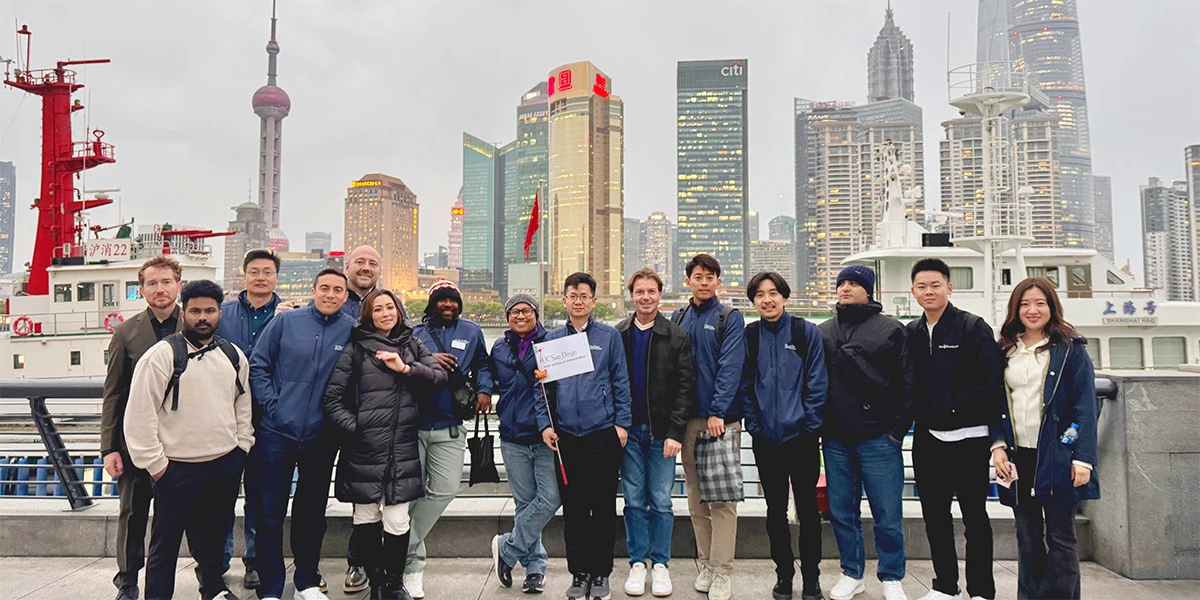
The documented program
Rady reports that its MBA cohort traveled to Beijing and Shanghai from March 22–29, 2025. The account describes professional and academic exchanges alongside cultural experiences. In Shanghai, visits included XtalPi and Huifu Payment. Rady’s original article provides the published record; this page draws learning-design observations from it.
A useful learning-design pattern
The broader planning lesson is to connect sessions through questions rather than through a list of destinations. A discussion about technology can lead to questions about commercialization, operating choices and customers. Faculty can then ask participants to compare what they observed with the frameworks used in class. This is our interpretation of the learning opportunity, not a reported assessment result.
What a future cohort could examine
A similar academic brief might ask where technology creates value, what enables adoption, and how market context affects a business model. Participants could record assumptions before departure and revise them after each encounter. A final comparison workshop would make differences in interpretation visible and give faculty material for follow-up discussion.
Designing your own China immersion
A published trip is evidence of one program, not a catalog of guaranteed future hosts. Your curriculum, participants, dates and available access determine the next agenda. Use the example to clarify the questions your group wants to explore, then develop a feasible route with your program partner.
Published source: Rady’s account of its China MBA immersion.